The Dark Ground
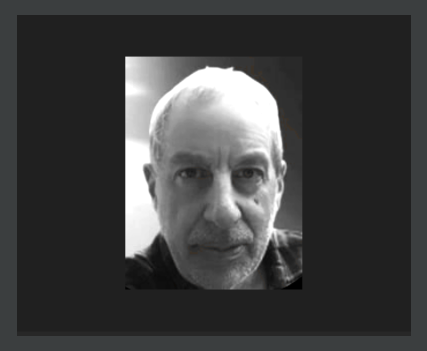
The universe is mostly dark. Not dark as mood or metaphor — dark as composition. Ordinary luminous matter, everything we have ever named or touched, is a minority component. Dark energy, dark matter, and vast stretches of near-empty space account for almost everything that exists. Stars are local and temporary. They flare, burn through nuclear fuel, and die. Over cosmic time, matter diffuses, structures thin, energy spreads across larger volumes. This is not an interpretation. It is what the measurements show.
Entropy is the concept that describes this direction. It is not a force or a law in the dramatic sense. It is a statistical tendency: in any closed system, there are overwhelmingly more disordered states than ordered ones. A tidy room has few possible arrangements. A messy room has millions. The universe, left to itself, moves from the tidy toward the scattered — not because it prefers disorder, but because disorder is what probability looks like when nothing intervenes.
Every ordered structure — a molecule, an organism, a civilization — is a local exception. It exists because something briefly concentrated energy into a pattern. The pattern is real. But it is maintained only as long as energy flows through it, and when the flow stops, the pattern dissolves. The star collapses. The organism dies. The civilization disperses. The order is real. The exception is also real — it is just not the direction things naturally go. And nothing from outside is pushing it back toward order.
Entropy says nothing about whether things matter. It describes the direction of physical processes. The mistake is to let the physical description slide into a posture — as though the universe's indifference were itself a kind of statement. It is not. Indifference requires a subject capable of concern. The universe does not lack concern. It lacks the agency that would make concern possible. This distinction matters, because the moment you frame indifference as a position, you have already smuggled in the subject you were trying to set aside.
The geological record makes this plain. Five great mass extinctions have reset life on this planet — the Permian alone erased perhaps ninety-six percent of marine species. The mechanisms were not dramatic. Volcanism. Ocean acidification. Atmospheric collapse. The planet did not mourn what it killed. It simply continued on. Carbon passed through extinction and made life possible in the same geological moment — trilobite, forest, reef, human civilization. The manifestations it passed through were real while they lasted and finished when they were done. Endings happen without an audience, without meaning attached, without the universe registering gain or loss.
We experience reality through categories that evolved to keep us alive. Darkness, warmth, silence, beauty — these are not features of the world. They are features of nervous systems that developed in a narrow band of conditions on one planet. A photon does not oppose darkness. It simply exists. Darkness enters the picture only when a nervous system notices the absence of photons. The universe itself contains no such distinction.
This is not a flaw. It is the condition of being a finite being. We cannot think without categories. We cannot perceive without filtering. But we can do something more disciplined than simply accumulate descriptions. We can notice which of our categories survive contact with reality and which do not — and replace the parochial with the more resilient. Entropy, energy, field, probability: these too are human concepts. The claim is not that we escape conceptual thought. It is that some concepts survive broader confrontation with what is there than others. Truth, on this picture, is not a view from nowhere. It is increasing invariance — the progressive replacement of concepts that depend on our particular situation with concepts that hold across a wider range of conditions.
The dark is not the opposite of the light. It is what light comes from.
Stars form from cold clouds of gas and dust. Gravity pulls them together. The core heats. Nuclear fusion ignites. The star burns — spending its potential, converting concentrated fuel into diffuse radiation, increasing entropy with every reaction. When the fuel is gone, the star dies. It scatters heavy elements into the surrounding dark, which becomes the cloud from which the next generation of stars may form.
The sequence is: darkness, briefly light, darkness again. The light was always the dark, in a temporarily organized form. It does not arrive from outside the ground. It is the ground's own activity.
Darkness is the noun. Light is the verb. Light is what darkness temporarily does. Not two things in proportion — one substance, and its occasional stirring. The stirring does not alter the ground any more than a wave alters the ocean.
One coherent reading of this is monism — the claim that there is, in the end, one process expressing itself in temporary forms. Not light and dark. Not matter and energy. Not order and disorder. The forms are real. A star is real. A face emerging from shadow is real. A thought is real — not merely an epiphenomenon, but a genuinely emergent organization with its own explanatory level, as real as the physics that makes it possible. But the forms are temporary configurations of something that was never separate from the ground it briefly organized itself into.
The stirring is real — as real as anything. But on this reading, it is the one thing being briefly, locally, something other than what it overwhelmingly and permanently is. The star does not arrive from outside the ground. It is the ground's own temporary coherence, spending down its potential toward the more probable state. When it is done, the material returns to the dark from which it came, and from which, given enough time and the right conditions, something else may stir.

You cannot project darkness. You can aim a light source at a face, and the darkness will be what remains where the light does not reach. That asymmetry is physics, not compositional preference. Twenty thousand years ago, an animal emerging from darkness was not a contrast study. It was a threat arriving from the prior condition of the world. The nervous system responded — not because it had decided darkness was meaningful, but because darkness was the ground condition and something had moved within it. We carry that wiring intact. It fires before we have time to have an opinion about it.
This is why chiaroscuro works, and why it works in a direction that cannot be reversed. A face lit against deep shadow is not the same event as a dark silhouette against a white field. The white-dominant image is inert — light everywhere is light settled, light finished. But light arriving from darkness triggers something older than aesthetics, older than thought. The body responds before the mind has formed a single conclusion about art or philosophy or the nature of light.
Everything important eventually becomes a question about time. Evolution is not survival. It is survival through time. Stars are not brightness. They are brightness sustained through time. Civilizations are not technology. They are organized energy maintained through time. Remove time and every distinction collapses into a single frozen instant.
Everything we call existence is a particular rate of change. Stars. Species. Mountains. Languages. Empires. Thoughts. All possess characteristic lifetimes. Perhaps science itself is the discovery of which clock governs which phenomenon.
This suggests something unexpected about persistence. Suppose one civilization burns every fossil fuel in three centuries before disappearing. Suppose another learns to live from contemporary solar income and persists for ten million years. Which dissipates more energy? The answer is no longer obvious. Persistence itself becomes a dissipative strategy. The greatest engine of entropy may not be intensity. It may be duration.
We think of significance in terms of impact — the bright flare, the sudden change. But thermodynamics suggests a different measure. The longest-lasting structures process the most energy, not because they burn hottest, but because they burn longest. The butterfly, the oak tree, the slow-turning glacier, the civilization that learns to endure — each is a conversation between matter and available gradients, sustained across time. None represents progress. Each represents a local answer to a local question.
Genes evolve slowly. Ideas evolve almost instantly. Once language allowed information to survive individual brains, biological evolution acquired an entirely new mechanism for reorganizing matter. Fire. Agriculture. Writing. Industry. Electricity. Computation. None of these escaped evolution. They accelerated one particular branch of it — allowing one primate species to redirect planetary energy flows on geological scales. From the perspective of Earth history, this is extraordinary. Not morally. Physically. Never before has one species altered atmospheric chemistry with such speed. But thermodynamics refuses the compliment. Entropy increases whether civilizations flourish or collapse. Physics grants no medals for speed.
What remains when you remove the categories that belong only to us? Not meaning. Not purpose. Not indifference — that still imagines a subject doing the ignoring. What remains are relationships. Fields. Gradients. Energy moving from concentrated to diffuse. Probability unfolding across time. These are also human concepts — there is no escaping that. But they are concepts that survive far broader confrontation with reality than darkness, warmth, or beauty. They are the structure our best physical theories suggest when you strip away the evolved intuitions.
An organism is a temporary structure through which energy flows — a monarch butterfly dissipating solar energy one way, a fungus another, a civilization another. Not progress. Conversation. Each a different local answer to the question of how matter and available gradients might briefly organize themselves before reorganizing into something else. These organizations are genuinely emergent. Consciousness, language, mathematics — these are not illusions produced by entropy. They are real patterns with real causal structure at their own level of description, even though they are physically realized in the thermodynamic processes described above.
Perhaps philosophy's task is not to comfort us, nor even to tell us the truth. It is to replace, one by one, the concepts that are parochial with concepts that survive broader and broader confrontation with reality — not to reach a view from nowhere, but to approximate one asymptotically. That project has a permanent limit: every description necessarily employs concepts, and no concept is perfectly neutral. We cannot think from outside thought. But the discipline is real. The direction is real. Each replacement brings the description closer to something that would remain approximately true across a wider range of conditions.
Fossil fuels are ancient sunlight — hundreds of millions of years of photosynthesis compressed into coal, oil, and gas. Human civilization is releasing that stored energy over centuries instead of eons. The carbon does not care. The climate does not care. The Second Law does not care. Carbon oxidizes. Heat redistributes. Oceans absorb. Atmospheres respond. Physics continues. It is tempting to imagine purpose here — that the universe wanted this acceleration. But physics records no distinction between acceleration and waste. Entropy increases regardless. What looks like triumph from inside the stirring looks like any other gradient being spent from outside it.
The dark ground was never darkness. It was the space in which stirring becomes possible. What persists is not light, not dark, not us. What persists is the stirring itself — temporary, improbable, and not without a strange kind of beauty. We are among the stirrings. It is not nothing.